

Ants not Grasshoppers: Climate Change Calls for Long-term Science
Oceans play a fundamental role in regulating Earth’s climate by storing carbon, yet the microbial processes that drive this regulation remain poorly understood. As climate change accelerates, understanding these complex ocean systems will require sustained investment in fundamental, long-term research rather than short-term, commercially driven science. While scientific advances are essential, addressing future climate challenges also depends on science diplomacy, stronger public engagement, and political commitment to ensure that ocean research receives the visibility and support needed to inform resilient climate action.
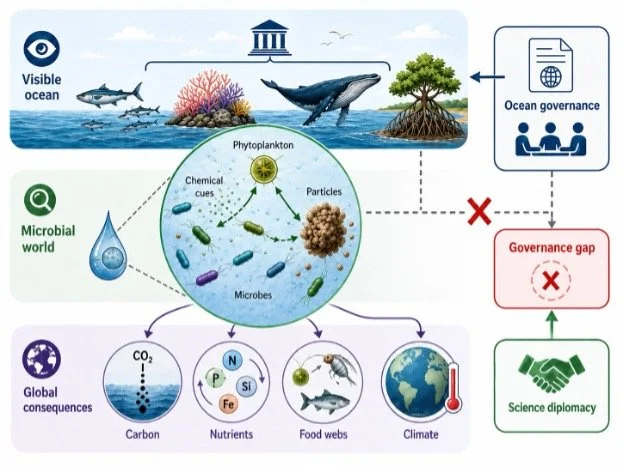
Decisions in the Dark: Microbial Behavior and the Governance Gap in Our Oceans
Marine microbes silently shape the functioning of the ocean, regulating carbon cycling, nutrient flows, oxygen production, and the ecosystems that sustain life on Earth. Yet despite their central role in climate regulation and ocean health, these microscopic organisms remain largely invisible within international ocean governance frameworks. As policymakers confront challenges such as ocean fertilization, biodiversity protection, and climate change, a critical gap emerges between scientific understanding and regulatory practice. The future of effective ocean governance may depend on whether microbial processes are fully integrated into policy, environmental assessments, and science diplomacy.
Want to become a Learning Pods author?
Are you familiar with one of the listed areas and would like to contribute an op-ed article? Please explore our “Areas of Focus” page and fill out the form here.
We would love to work with you to bring your insights & thoughts on any and all areas in science diplomacy to the wider audience.