How One Health Provides a Framework for Understanding Pandemics
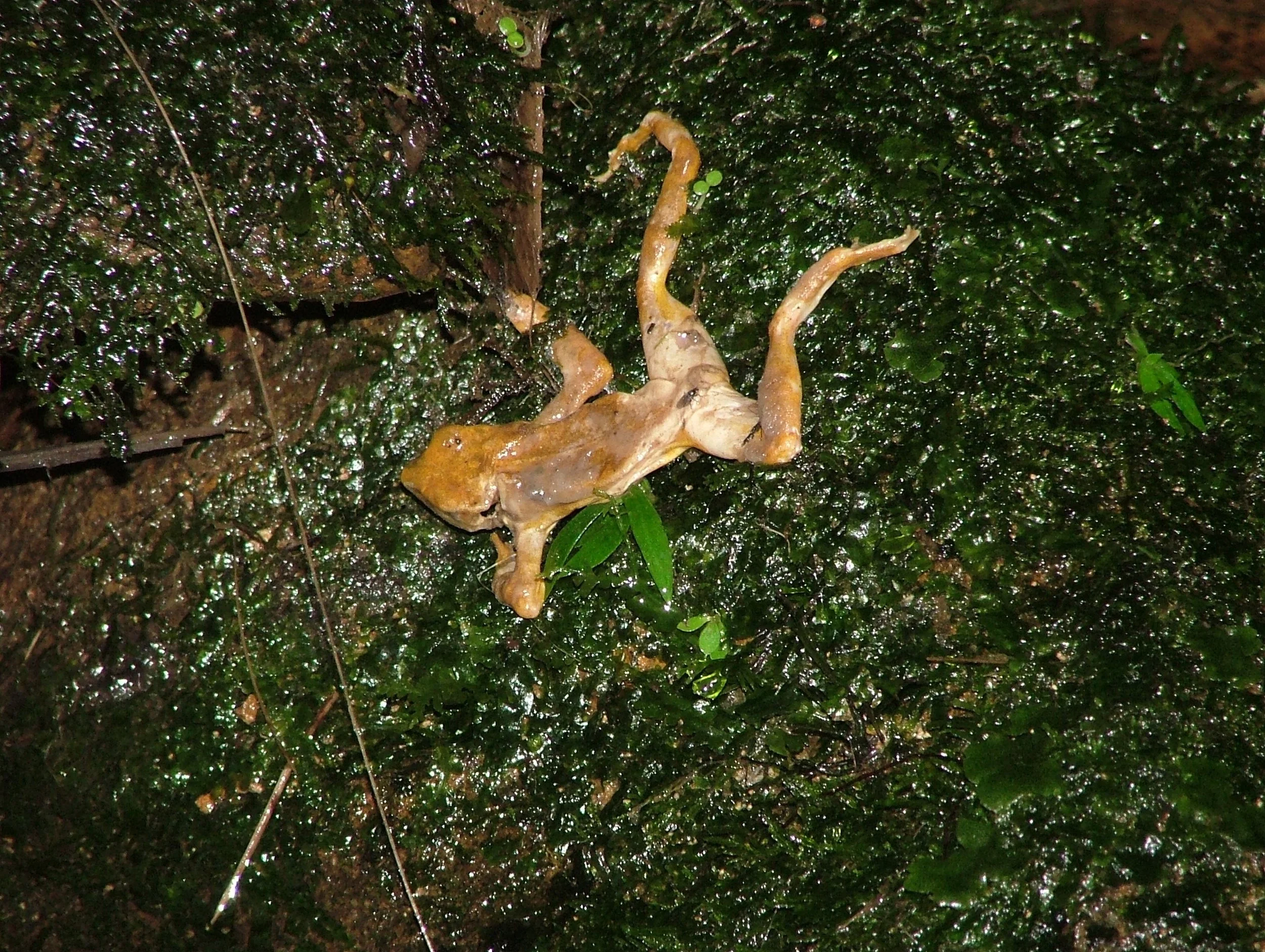
Wildlife species, including amphibians, have been affected by invasive diseases. Amphibian losses had cascading effects on human health.
Over the past few months, we have seen several cases of emerging infectious diseases.We’ve seen reemergence of Bundibugyo Ebola in the Congo Basin [1], of yellow fever in Brazil [2], and the spread of Cyclospora into the US from Mexico.
These new cases were triggered through diverse mechanisms; in some cases humans directly facilitated the spread of the disease through transportation infrastructure and supply chains (e.g., Cyclospora), while in others evidence suggests that human activities as well as changes in temperature and rainfall patterns may have promoted interactions of humans, reservoir species, and disease vectors in ways that increased the incidence of disease.
For example, modeling by Brazilian scientists suggests that the reemergence of yellow fever after 80 years may have been triggered by prolonged drought in the region. Scientists have evidence that dry conditions have prompted monkeys and forest mosquitoes to move closer into cities, bringing both a disease reservoir and a vector closer to human populations.
Results of genetic analyses from African researchers indicates that Bundibugyo Ebola is likely the result of recent spillover from an animal reservoir, as it is not closely related to the virus that caused an earlier outbreak. This is the largest Ebola outbreak ever reported in the country and is expanding faster than any previous Ebola outbreak, possibly threatening human communities in neighboring countries.
In Africa scientists reported rapid spread of Anopheles stephensi, an invasive mosquito species, across the Sahel region following the mosquito’s introduction through human shipping routes a decade ago. Health officials are concerned because this mosquito is a vector for malaria and its spread increases the probability of malaria in new areas.
These pandemics illustrate the concept of OneHealth, showing the interconnected nature of human health, environmental health, and animal health and the need for a holistic, or systems analysis approach to understanding and addressing diseases. The entangled threads of OneHealth are but one part of the larger polycrisis facing society, in which many entangled crises interact and compound the scope of the problem.
The interconnected nature of multiple factors contributing to disease risk offers multiple opportunities for science and for science diplomacy. First, these cases highlight the need for global sharing of data and information on the distribution of diseases, hosts, and vectors and the human footprint on the landscape. For example, the spread of Anopheles in Africa was tracked by a multinational group of researchers who shared genetic data for comparison, while genetic sequences of the Bundibugyo virus were analyzed by a binational research team from Uganda and the DRC.
Second, the interconnectedness of these crises means that scientific methods can identify intervention points and where relevant policy levers can be applied to address entangled factors. For example, reducing deforestation, strengthening institutions, and reducing inequality are all helpful in addressing pandemic disease, the biodiversity crisis, food and water insecurity, and extreme weather [3].
Finally, coordinated efforts among scientists, governments, and community stakeholders will be necessary to find effective levers to improve regional resilience to the effects of these interacting crises. As species adapt to new conditions, responses are increasingly unpredictable, nonlinear, or unconventional, meaning our ability to predict outcomes becomes more difficult.
In the case of the yellow fever outbreak in Brazil multiple factors acted simultaneously to trigger an epidemic. Deforestation was associated with more humans in forested areas, which increased contact between humans and infected mosquitoes; monkeys moved into more populated areas during periods of increased warming and drought, where they served as a reservoir host for yellow fever; and the warm dry weather promoted feeding and reproduction in the mosquitoes. Reducing risk might be achieved by considering different interventions for any of these elements. This is where scientists using Systems Analysis can collaborate with policymakers, practitioners, and local communities to identify tradeoffs, win-win situations, and leverage points to maximize outcomes across interconnected systems [4].
We often refer to incidences of these kinds of synergistic and compounding problems as “the perfect storm,” and we are seeing an increase in the intensity and frequency of these shocks in many areas as the polycrisis grows. It is reassuring to know that the natural and social sciences provide useful tools that help us understand the problems, assess risks and tradeoffs, and identify interventions.
References:
[1] https://www.forbes.com/sites/johndrake/2026/08/11/congos-ebola-epidemic-began-with-a-fresh-jump-from-an-animal-dating-it-will-take-more-genomes/
[2] https://www.science.org/content/article/drought-may-have-driven-brazil-s-first-yellow-fever-outbreak-nearly-80-years?utm_source=sfmc&utm_medium=email&utm_content=alert&utm_campaign=WeeklyLatestNews&et_rid=49274103&et_cid=6040418
[3] Colin J Carlson, Gregory F Albery, Cory Merow, Christopher H Trisos , Casey M Zipfel , Evan A Eskew , Kevin J Olival , Noam Ross , Shweta Bansal. 2022. Climate change increases cross-species viral transmission risk. 2022. Nature 607(7919):555-562. doi: 10.1038/s41586-022-04788-w
[4] Torre E. Lavelle, Cecilia A. Sánchez, Marina Andrijevic, Daniel J. Becker, Rory Gibb, Gregg S. Gonsalves, Zoe O’Donoghue, Shonali Pachauri, Laura M. Pereira, Timothée Poisot, Sadie J. Ryan, Stephanie N. Seifert, Charles Whittaker & Colin J. Carlson. (Preprint) Pandemic risk in the Shared Socioeconomic Pathways.https://doi.org/10.64898/2026.07.29.26359250